
Workshops
I offer 2- to 3-hour workshops (in Dutch or English) for small groups of scientists. These workshops help you articulate your research in an accessible and compelling way. Through practical exercises, examples from the media, and a healthy dose of humor, you’ll learn to look at your own research in a new light.
For example, I led workshops for groups of researchers at the University of Amsterdam (UVA), Erasmus University Rotterdam (EUR), and Utrecht University (UU), among others. These took place, for example, during a PhD Day or at the invitation of a research group.
"The workshop was full of practical tips that I could put into practice right away. The mix of instruction and hands-on assignments worked really well. Plus, Karst’s enthusiasm was contagious."
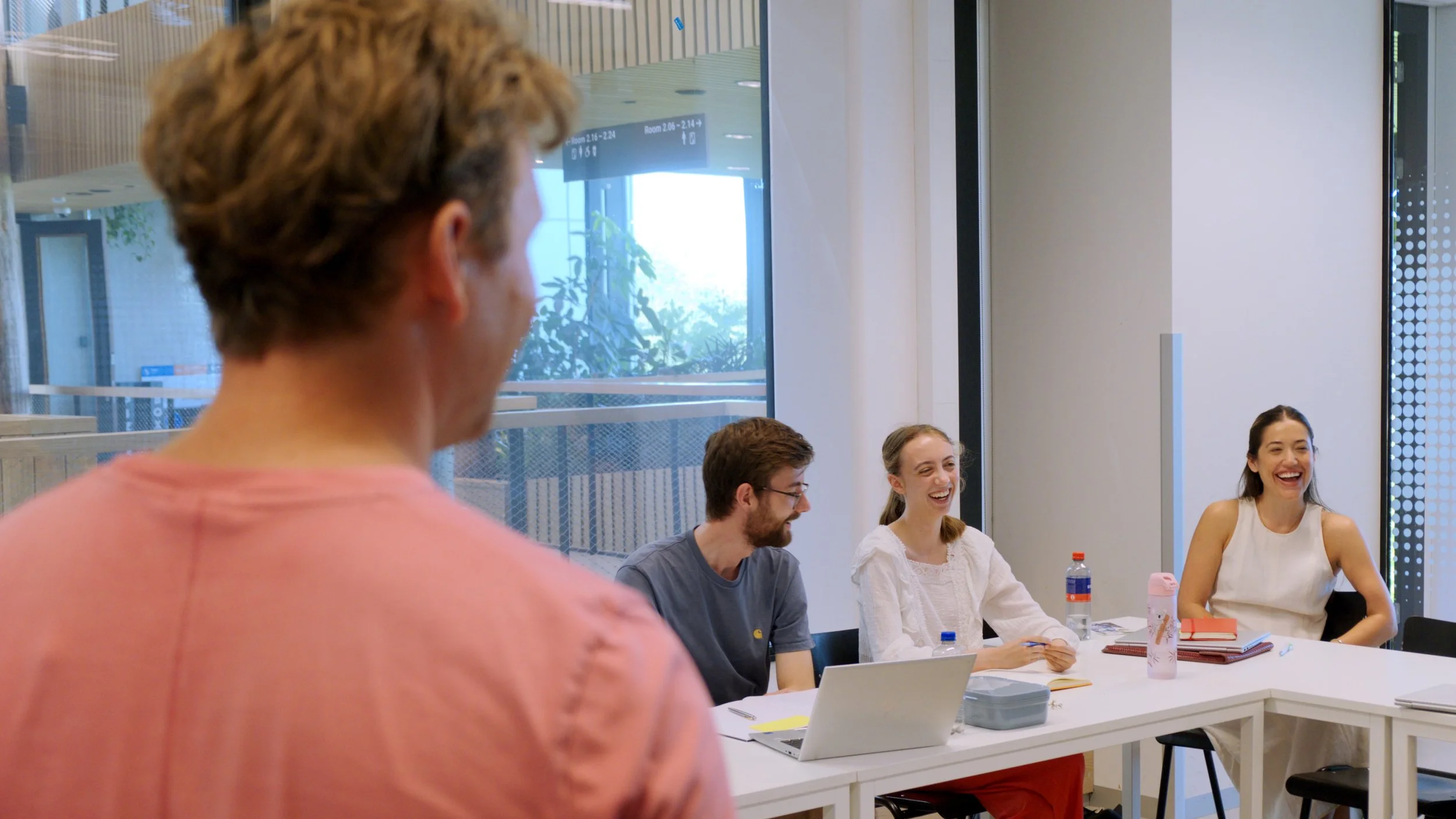
The workshops are interactive and often a bit confrontational. Researchers often think differently from the people they want to reach. While researchers seek nuance and precision, journalists seek news, policymakers seek relevance, and the general public seeks recognition. During the workshop, we make those differences tangible. This often yields insights that are uncomfortable, but also amusing. That’s precisely where the value often lies: you learn to see things through the eyes of someone who isn’t familiar with your field.
Registration is now open for the “Storytelling and the Media” workshop on November 19!
I usually lead workshops by invitation only, but on November 19, I’m organizing a workshop in Amsterdam that’s open to researchers from all universities and colleges. Would you like to learn how to better bring your research to the attention of journalists, policymakers, or a broader audience? If so, please leave your email address here, and I’ll keep you updated on further details. (The workshop will be conducted in English, unless all participants speak Dutch.) If you can’t make it on October 1 or November 19 but would like to participate at another time, please leave your email address as well.
Location: Singel, Amsterdam
Time: 2:00 p.m. to 5:
Cost: 225 euros, excluding VAT (Most universities have a personal development budget for this. If yours does not, please send me an email)
Who: For all researchers (max. 9 participants)
You’re conducting important research, but how do you convince others of that? When you talk about your research at a birthday party, people sometimes look at you with a blank stare. It’s exhausting, so you’d rather talk about something else. In this workshop, you’ll learn how to talk about your research in a way that really sticks with people—not by oversimplifying your research, but by structuring your story effectively.
That’s not just useful at birthday parties. It helps you with casual conversations, with posting on LinkedIn, and with piquing journalists’ interest. Thanks to my background in journalism, I have a keen sense of the latter. As a result, over the past five years, I’ve helped more than a hundred scientists secure interviews on Radio 1 and in newspapers such as NRC and Trouw.
Many researchers would like to get their work featured in the newspaper or on the radio, but aren’t quite sure where to start. In this workshop, you’ll get a glimpse into the world of journalism and learn what makes journalists take notice. That way, you’ll understand exactly how the news works and why some research makes it into the paper while other research doesn’t. I’ll also teach you how to stay in control of your story, so your research isn’t oversimplified or misinterpreted.
• The basics of storytelling and how to tell a good story about your research
• What makes research newsworthy and what considerations journalists take into account
• How to link your research findings to current developments and societal debates
• How to find relevant journalists who write about your topic
• How to translate your expertise into an op-ed
• Interview do’s and don’ts. In short: how to explain complex concepts without losing control of the content.
Storytelling and the Media

"I really enjoyed the workshop. It challenged me to look at my research in a different way. The assignments and personalized feedback were especially valuable."
Storytelling & LinkedIn

Would you rather be in control of what you share with the outside world? Then LinkedIn is a powerful channel. In this workshop, you’ll learn how to turn your research into a story that resonates with people outside the academic world. We’ll look at what people actually read, why some posts gain a lot of reach while others go unnoticed, and how you can stay visible without constantly having to talk about yourself.
• The basics of storytelling and how to tell a good story about your research
• How to clearly explain complex research findings without losing sight of the content
• How to write a good opening or “hook”
• What sets a strong post apart from one that barely gets read
• What are logical times to share something—and when you should actually refrain from posting
• How to find angles that are interesting to people outside your field
• Pitfalls, such as too much jargon or too much/too littlecontext
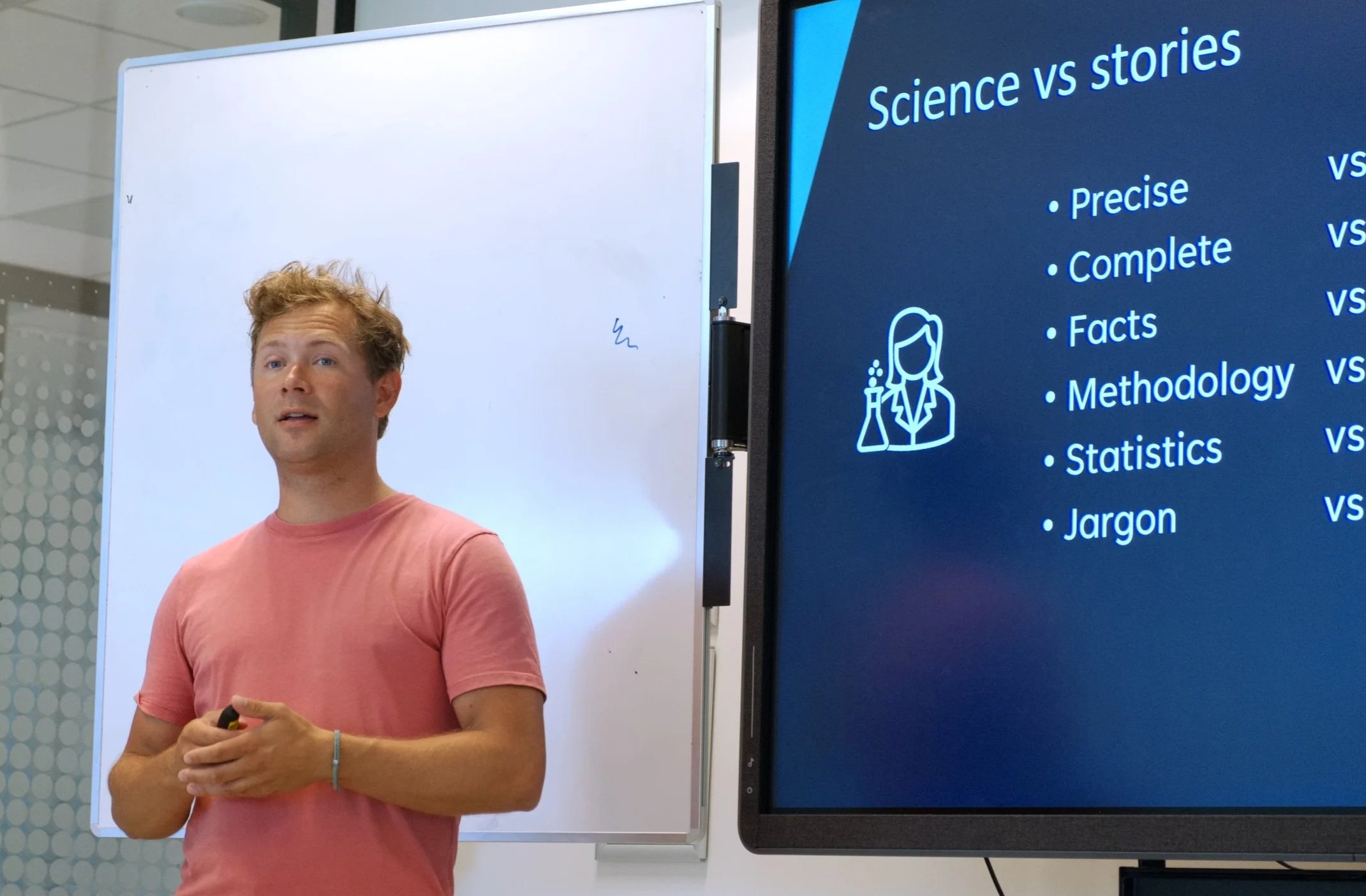
“I took a really enjoyable and informative training course with Karst. You practice using your own research and receive concrete feedback that quickly helps you refine your story and make it clearer. The atmosphere is relaxed, and there’s a lot of laughter. You can even have Karst interview you: it’s nerve-wracking, but it’s actually one of the most useful parts. I highly recommend it to researchers who want to better explain their work to audiences outside the academic world.”
Lotte Mikkers - Ph.D. candidate at
(attended a workshop)